What is a rare form of pneumonia?
 Matthew Cannon
 .
Likewise, which type of pneumonia is the most serious?
Bacterial CAP is usually more serious than other types and is more common among adults. Atypical pneumonia, often called walking pneumonia, is a milder form. Viral and bacterial pneumonia share some common signs, but doctors can often distinguish between them by a patient's symptoms.
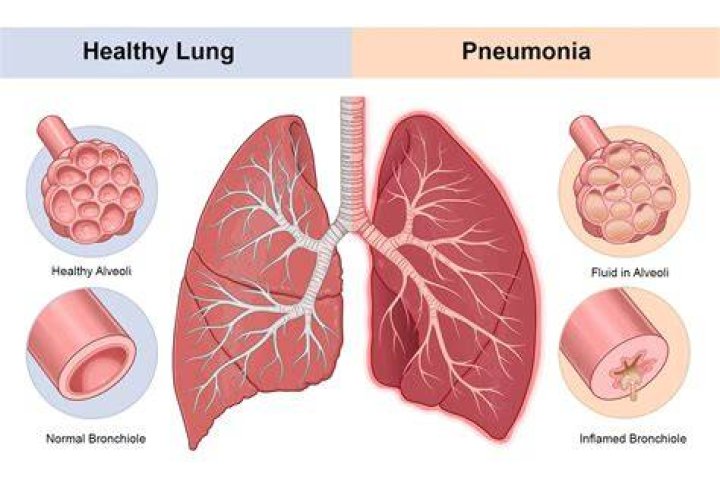
One may also ask, what is the main cause of pneumonia? Pneumonia is a lung disease characterized by inflammation of the airspaces in the lungs, most commonly due to an infection. Pneumonia may be caused by viral infections, bacterial infections, or fungi; less frequently by other causes. The most common bacterial type that causes pneumonia is Streptococcus pneumoniae.
In respect to this, what are the 4 stages of pneumonia?
Pneumonia has four stages, namely consolidation, red hepatization, grey hepatization and resolution.
- Consolidation. Occurs in the first 24 hours. Cellular exudates containing neutrophils, lymphocytes and fibrin replaces the alveolar air.
- Red Hepatization. Occurs in the 2-3 days after consolidation.
What are the 30 types of pneumonia?
There are more than 30 different causes of pneumonia, and they're grouped by the cause. The main types of pneumonia are bacterial, viral, and mycoplasma pneumonia. A cough that produces green, yellow, or bloody mucus is the most common symptom of pneumonia.
Related Question Answers
Can you catch pneumonia from someone who has it?
Pneumonia is a lung infection caused by bacteria, viruses, or fungi. Some of these germs do spread from person to person, so you may be contagious if you have certain types of pneumonia. Fungal pneumonia passes from the environment to a person, but it's not contagious from person to person.How do u test for pneumonia?
Chest x ray to look for inflammation in your lungs. A chest x ray is the best test for diagnosing pneumonia. However, this test won't tell your doctor what kind of germ is causing the pneumonia. Blood tests such as a complete blood count (CBC) to see if your immune system is actively fighting an infection.How bad does pneumonia have to be to be hospitalized?
This can cause your pneumonia to come back. If your case of pneumonia is severe, you may need to be hospitalized. If you are experiencing shortness of breath, you may be given oxygen to help your breathing. You might also receive antibiotics intravenously (through an IV).How long does it take to heal from pneumonia?
It can take about six weeks to fully recover from walking pneumonia. However, most people recover from pneumonia in about a week. Bacterial pneumonia usually starts to improve shortly after starting antibiotics, while viral pneumonia usually starts to improve after about three days.Why is pneumonia so deadly?
When you have pneumonia, the tiny air sacs in your lungs become inflamed and can fill with fluid or even pus. Pneumonia can range from a mild to serious or life-threatening infection and can sometimes lead to death. Additionally, pneumonia is the leading cause of death worldwide for children under 5 years of age.Where does your back hurt with pneumonia?
PneumoniaPneumonia, an infection deep within the lungs, can often manifest as pain in the middle back.What does a chest xray show for pneumonia?
Chest x-ray: An x-ray exam will allow your doctor to see your lungs, heart and blood vessels to help determine if you have pneumonia. A CT scan can also show complications of pneumonia, abscesses or pleural effusions and enlarged lymph nodes.How many times can you get pneumonia?
Recurrent pneumonia is defined as 3 or more episodes of pneumonia in a lifetime or 2 or more episodes within a six-month period. The most common symptoms are cough, wheeze, dyspnea, and chest discomfort.What is silent pneumonia?
"Walking pneumonia" is a non-medical term for a mild case of pneumonia. Technically, it's called atypical pneumonia and is caused by bacteria or viruses; often a common bacterium called Mycoplasma pneumonia. Walking pneumonia can still make you miserable, with cough, fever, chest pain, mild chills, headache, etc.Is pneumonia a virus?
Viral pneumonia is a pneumonia caused by a virus. Viruses are one of the two major causes of pneumonia, the other being bacteria; less common causes are fungi and parasites. Viruses are the most common cause of pneumonia in children, while in adults bacteria are a more common cause.What does a pneumonia cough sound like?
A wet, productive cough produces sputum (phlegm or mucus from the lungs or sinuses). The cough sounds soupy and may come with a wheezing or rattling sound and tightness in your chest. Most wet coughs are caused by an infection: a common cold, the flu, bronchitis, or pneumonia.How long is pneumonia contagious for?
In most cases, infections are contagious for a few days before symptoms appear and for a few days after. The exact length of time a person is contagious depends on the type of microorganism causing the infection. Some forms of pneumonia, such as pneumonia caused by mycoplasma, remain contagious for several weeks.Can you have pneumonia and not know it?
Pneumonia is a lung infection that can range from mild to so severe that you have to go to the hospital. You can get pneumonia in one or both lungs. You can also have it and not know it. Doctors call this walking pneumonia.What is LLL pneumonia?
Lobar pneumonia is a form of pneumonia characterized by inflammatory exudate within the intra-alveolar space resulting in consolidation that affects a large and continuous area of the lobe of a lung. It is one of the two anatomic classifications of pneumonia (the other being bronchopneumonia).Can a cold turn into pneumonia?
Pneumonia is almost always caused by a virus or a bacterial infection. Viral pneumonia often begins as a cold or the flu, then develops into pneumonia. Symptoms of pneumonia caused by a virus come on more gradually and are usually milder than bacterial pneumonia. In rare cases, pneumonia can also be caused by a fungus.What does it feel like when you have pneumonia?
Feeling like you can't catch your breath, especially when you move around a lot. Feeling very tired. Low appetite. Sharp or stabby chest pain (you might feel it more when you cough or take a deep breath)What is the strongest antibiotic for pneumonia?
Levofloxacin is rapidly becoming a popular choice in pneumonia; this agent is a fluoroquinolone used to treat CAP caused by S aureus, S pneumoniae (including penicillin-resistant strains), H influenzae, H parainfluenzae, Klebsiella pneumoniae, M catarrhalis, C pneumoniae, Legionella pneumophila, or M pneumoniae.What are the 3 major causes of pneumonia?
Common Causes of Pneumonia- Human Metapneumovirus (HMPV) Infection.
- Human Parainfluenza Virus (HPIV) Infection.
- Influenza (Flu)
- Legionnaires' Disease.
- Mycoplasma Pneumoniae Infection.
- Pneumococcal Disease.
- Pneumocystis Pneumonia.
- Respiratory Syncytial Virus (RSV) Infection.
What are some risk factors for pneumonia?
Certain factors can also increase your risk of pneumonia, such as:- Having a weakened immune system.
- Being hospitalized or being on a ventilator.
- Having a chronic condition including asthma, chronic obstructive pulmonary disease, structural lung disease and heart disease.
- Smoking.