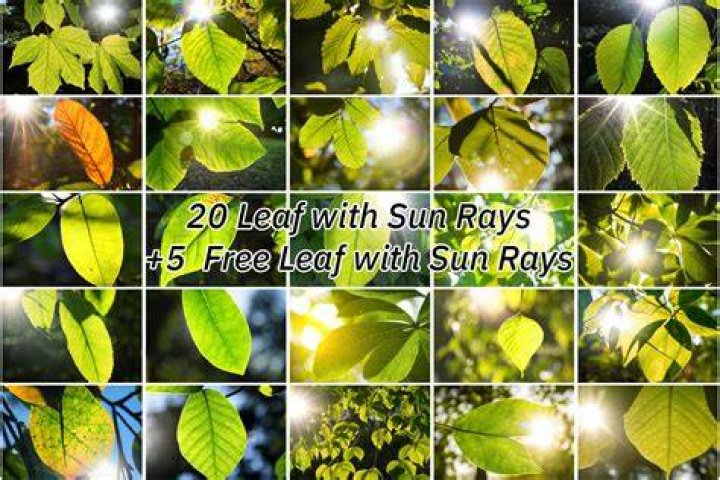
What are Sun leaves?
 Marcus Reynolds
 .
Keeping this in view, what are sun and shade leaves?
Some plants produce "sun leaves" in direct sun and "shade leaves" where the leaves are shaded by others. Shade leaves are typically larger in area, but thinner than sun leaves. Sun leaves become thicker than shade leaves because they develop longer palisade cells or an additional layer of palisade cells.
Also, do sun or shade leaves have more stomata? Comparing stomatal densities in sun and shade It plays a key role in photosynthesis as it allows the exchange of carbon dioxide and oxygen to occur. Generally, leaves found in the sun have more stomata, thicker mesophylls and thicker cuticular membranes in comparison to leaves found in the shade (Osborn & Taylor 1990).
why are sun leaves smaller than shade leaves?
Leaves which grow in the shade ('shade leaves') are generally larger in area but thinner than leaves which grow in full sunlight ('sun leaves'). Sun leaves become thicker than shade leaves because they have a thicker cuticle and longer palisade cells, and sometimes several layers of palisade cells.
Why do sun leaves have more stomata?
Stomata control gas exchange, water loss, and temperature of leaves. Stomata will be found more in leaves less exposed to sunlight to reduce evaporation or water loss. Species with higher stomatal density tend to be more responsive to the increase in CO2, so the rate of photosynthesis is greater [21].
Related Question Answers
Should I remove shade leaves?
Leaves should not be removed at all, neither big or small, as long as the plant is alive, although in some cases you might be forced to do so. Once the plant has developed enough and some of the leaves end up shaded, the plants will get rid of them themselves by absorbing the nutrients and drying it up.What is chlorophyll a and b?
Role of Chlorophyll AThe primary pigment of photosynthesis is chlorophyll A. Chlorophyll B is an accessory pigment because it is not necessary for photosynthesis to occur. Chlorophyll A absorbs light from the orange-red and violet-blue areas of the electromagnetic spectrum.Do darker leaves have more chloroplasts?
The cells where photosynthesis takes place, called chloroplasts, are smaller as well. In these shade leaves, chloroplasts are larger and contain more of the chlorophyll needed to absorb light. Because of this, shade leaves appear darker green.Do leaves grow bigger?
Leaf sizes all over the globe differ in size more than 100,000 times, from less than a square millimetre to over a square metre (10 square feet) in area. But bigger leaves are also usually thicker leaves, which makes it harder for the plant to shed heat as efficiently.Why are stomata shut at night?
Closed for the NightIn order to minimize excessive water loss, stomata tend to close at night, when photosynthesis is not occurring and there is less benefit to taking in carbon dioxide.Do dark green leaves have more chlorophyll?
It's all about survival. Plants that get abundant sunlight have more chlorophyll a and thus have a lighter shade of green. Plants which grow in the shade have chlorophyll b in abundance – an adaptation for capturing low intensity light. The leaves are darker in these plants, as compared to those which grow in sunlight.Why are leaves bigger at the bottom?
Leaves on the bottom are shaded by the tree crown above, and their environment is shady and moister in their protected position. Leaves here are bigger to capture more of the partially filtered sunlight coming through the leaves above. These are refered to as sun and shade leaves.Why are top leaves darker?
As the upper surface of the leaf is more exposed to the sun than the underside of the leaf, there will be more chlorophyll on the upper surface of the leaf so as to maximise the amount of sunlight that the chlorophyll receives. This results in a more intense green on the upper surface then on the underside of the leaf.What part of the leaf cells makes the leaf green?
chloroplasts