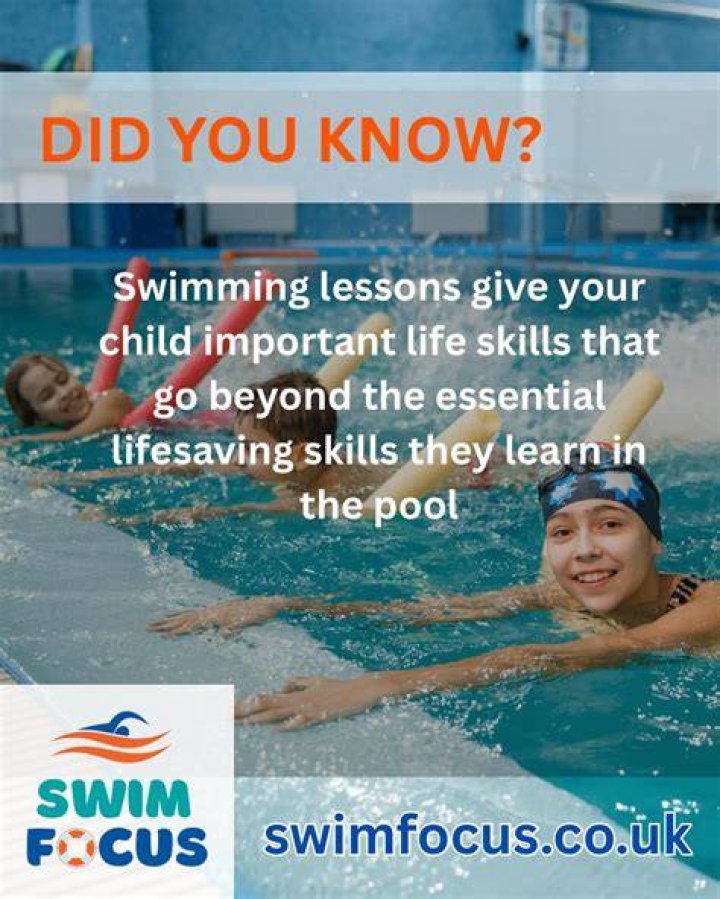
How do you give swimming lessons?
 Christopher Anderson
 - Skill: Breath control, which is the first step in teaching your child to swim independently.
- Tip: Make sure when you submerge your face and blow bubbles, you come up with a smile on your face.
- Skill: Developing a fast, strong arm motion.
.
Hereof, how do adults learn to swim lessons?
Develop Trust
- Have patience and empathy: Allow the adult novice swimmer to learn at their own pace.
- Encourage your students to wear goggles.
- Get in the water with your student(s) to demonstrate the skills you want to teach.
Beside above, can you learn swimming at 40? Anyone can learn to swim at any age, assuming they're physically capable of it, and chances are that you're plenty capable! The way in which you learn might be different from how they teach kids, though, so be warned! So yes, you can definitely learn to swim at the age of 40, as long as you put in the time and effort!
Regarding this, how can I make swimming lessons fun?
We at AquaMobile have compiled 5 Ways to Make Swimming Lessons for Kids Fun.
- Use combinations of swimming aids such as fins, pull buoys or snorkels.
- Have a diverse range of sets and drills to alternate between.
- Include land drills into practice times.
- Brainstorm target goals together with students.
Can we learn swimming on your own?
It is possible to learn to swim by yourself. Possibly the simplest stroke for a beginner is the front crawl. Once you understand how to propel yourself across the top of the water, you can practice and learn other strokes.
Related Question Answers
How many days does it take to learn swimming?
On average a person can learn to swim freestyle within 10-15 days. Bettering the speed, the skill and learning new strokes depends on the interest of the individual. In my opinion a week is enough to learn perfect swimming.Can I learn to swim at 50?
A fifty year can learn anything! There are no age limits when it comes to learning how to swim. Get on Youtube and search for "swim lessons." There are many videos out there and you can easily teach yourself. The reason why "floating" is one of the first lessons is to help people feel comfortable in the water.How many swimming lessons do adults need?
For adults who learn at an average pace, and have no fear water, around 20 hours of lessons over the course of a few months might be enough to gain basic swimming skills. For adults who need extra time becoming comfortable in the water, this process may take many more months.Can you learn to swim in a month?
It is possible to learn the various strokes in 1 month, but it will take months of practice to perfect those strokes and get them more efficient. Originally Answered: Can I learn swimming in 1 month? Yes, you can.Is it difficult for adults to learn how do you swim?
It's not difficult for an adult to learn to swim. Actually it's very easy if you are determined to learn to swim. It's not difficult for an adult to learn to swim. Actually it's very easy if you are determined to learn to swim.How many adults cant swim?
Overall, the survey finds that more than half of all Americans (54 percent) either can't swim or don't have all of the basic swimming skills. Other key survey findings are: About one in three (33 percent) African Americans reports that they can perform all five basic swimming skills, compared to 51 percent of whites.What Age Can child swim without armbands?
Dd (age nearly 3) is fairly close to swimming without anything, without lessons. Just the way they are really! On when the best time is its hard to say. Depends how confident he is with his arm bands off.How do you swim for kids?
How to Teach a Kid to Swim Freestyle- Step 1: Kick the Legs. When most parents pop their infant into the pool for the first time, they almost always try to get the child to move their feet.
- Step 2: Move Those Arms.
- Step 3: Now Breathe.
- Step 4: Practice Patience.
How do you teach a child to float?
Steps- Encourage the child. Encourage him/her to get into the water to learn to float.
- Make them comfortable. Make them feel safe in the pool with you.
- Carry them gently and let them lie on their back.
- Slowly release your arms from their back.
- Practice.
- Reward the child for their hard work.
- Continue to practice.