How do you apply varnish evenly?
 Christopher Anderson
 .
People also ask, how do you apply clear varnish?
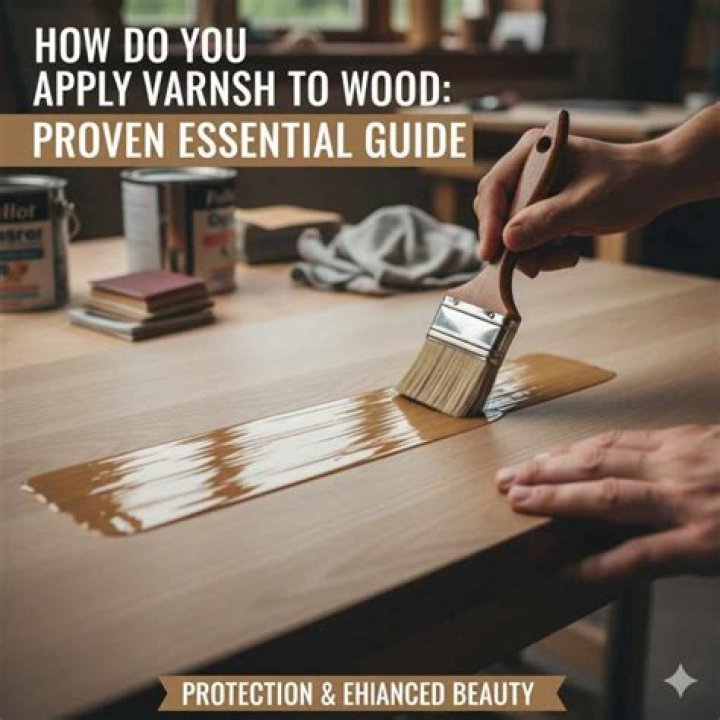
To varnish wood, use a flat paintbrush or foam applicator to apply the varnish to the wood. As you apply the varnish, use long, even strokes, and work along the wood grain. After 24 hours, sand the first coat with 280-grit sandpaper, then use a dry cloth to wipe away any dust.
how long does varnish last? Gloss oil-based varnish, polyurethane and Danish oil can last 10 or 20 years, though satin finishes and stains may fail sooner as pigments and flattening agents disable the driers. Water-based coatings and paints can also be viable longer than three years. Shellac, though, can go bad in under a year.
In respect to this, can I apply varnish with a roller?
Varnish can be applied in any of three ways: by brush, with a roller and pad, or by spraying. You can buy a Polyfoam brush for each coat of varnish that you'll apply; they are that inexpensive. You will also be assured of good quality work even with inexperience since these brushes don't leave brush marks behind.
How do I get a smooth finish with varnish?
Start with a high-quality natural bristle brush and you're halfway to a smooth finish. In addition to a natural bristle brush, you'll need a sandpaper block with up to three grits of sandpaper (from 100 to 220), shop vacuum, lint-free cloths and your polyurethane varnish.
Related Question Answers
How many coats of varnish should I apply?
Many varnishes require two or even three coats for a smooth finish -- use your own judgment, and follow the manufacturer's recommendations. Between coats of varnish, let the first coat of varnish harden or dry, as recommended by the manufacturer.Why do we put varnish on wood?
Pros of a Varnish FinishWood varnish doesn't cover the grain of the wood furniture. In fact, varnish soaks into the wood finish to enhance the natural wood color in furniture and also protect it from dirt, sunlight, and water. Using varnish offers one of the most natural looks of any product available.How thick is a coat of varnish?
Human hair is from 40 microns to 100 microns on average, so we are talking about a varnish layer in the range of human hair thickness, which is quite remarkable. Some of the individual coats are 1 or 2 microns thick.Can I varnish over varnish without sanding?
Painting Over Varnish Without Sanding. It is often recommend that you sand any surface thoroughly prior to painting it. Painting over varnish without sanding is not a best practice but it can be done.What is the best varnish?
Epifanes Clear Gloss VarnishEpifanes is considered by many to be the best varnish around. This is a spar varnish, with UV inhibitors built in. It is made with a combination of phenol and alkyd resins for superior protection. They also use tung oil, rather than the less expensive linseed oil.Do you have to sand between coats of varnish?
Sanding between coats of varnish is important because it achieves two things: First, it knocks down the "high spots" and second, but more importantly, it provides a tooth for the next coat to adhere to. Otherwise, the subsequent coats can delaminate and lift off in large sheets.Can I varnish over old varnish?
Short answer: yes, you can apply wipe-on over previous varnish. Whether it'll work well in this specific case nobody can say, you'll have to try it and see. But following the basic prep guidelines it'll usually work fine. It isn't as simple as just wiping on the Minwax product over the existing varnish.How do you keep brush marks from polyurethane?
A light coating of finish after sanding disguises the area.- Sand down the brush marks lightly with the fine-grit sandpaper.
- Brush the sanded area off with a soft cloth to remove all traces of dirt and grit from the sanding.
- Apply the polyurethane finish lightly to the brush, making sure to wipe off any extra.
What is the difference between varnish and wood stain?
The difference between Stain and Stain & Varnish is that Stain & Varnush has that traditional timber stain combined with a professional clear polyurethane for one-step timber colour and protection. Stain & Varnish adds rich colour to timber AND preserves the stain by protecting it with a highly durable clear finish.Is stain and varnish the same?
While a stain deeply penetrates wood, a varnish remains on the outside of your surfaces, forming a protective barrier. A varnish is usually clear and transparent, and it will harden along the outer layer of your wood. Some varnishes do include colour to enhance or alter the wood shade.Do I need to varnish after staining?
Once you have finished your staining you will need to apply a coat of clear, either varnish or polyurethane, without a coat of clear the stain will slowly be worn away with wear and tear.How do you stain already varnished wood?
The tint of varnished wood can certainly be manipulated by a wiping stain. Clean and rough-up the varnish first to remove any grime, dust or debris and also to give the surface some texture the stain can cling to. Use a cleaner manufactured for such jobs, and a tack cloth. Do the roughing up with fine-grit sandpaper.How long after staining Can I varnish?
Every finish and stain is different, and drying times can vary widely from brand to brand or product to product. As a rule of thumb, you should wait 24-48 hours to allow the stain to fully dry before applying your polyurethane. If you're extra cautious, you may even choose to wait 72 hours before applying your poly.Do you need to seal wood after staining?
Most stains should be sealed to prevent bleeding. After smoothing the stained wood, apply a sealer coat of thinned shellac, sanding sealer, or other appropriate sealer. Do not use shellac with NGR or water-base stains. If you plan to finish the piece with polyurethane, make sure the sealer is compatible.Can you mix stain with varnish?
You can mix oil-based stain with oil-based varnish to make your own tinted varnish. Make a tinted varnish to adjust the color of wood furniture.How do you change the color of varnish?
How to Tint Varnish- Choose the color you would like the item to be when you are finished with the task.
- Select the colors of stain you wish to use for tinting and pour no more than one to two ounces of color into a gallon of varnish.
- Brush or spray on the varnish in thin coats, allowing for each coat to dry before another application.